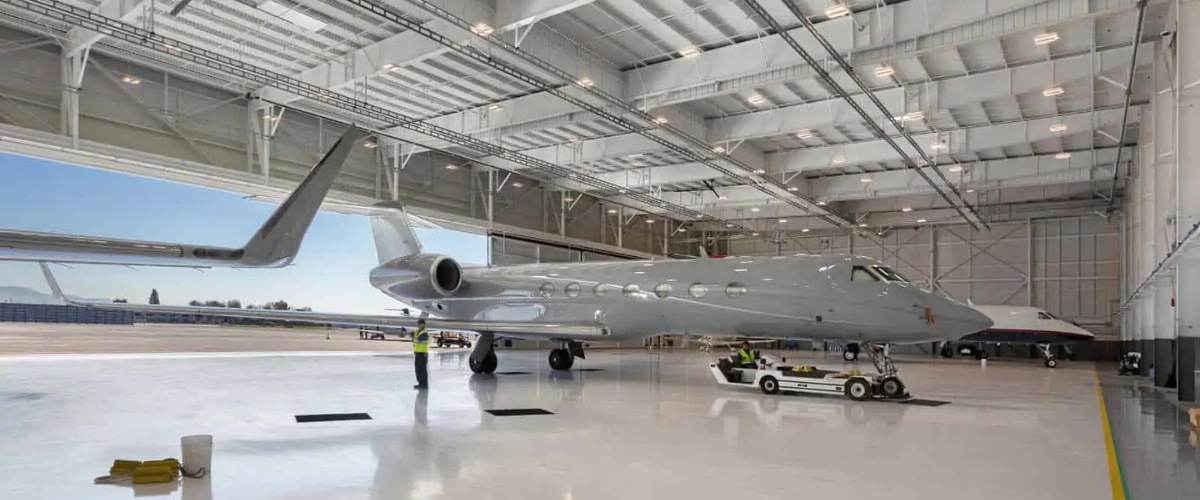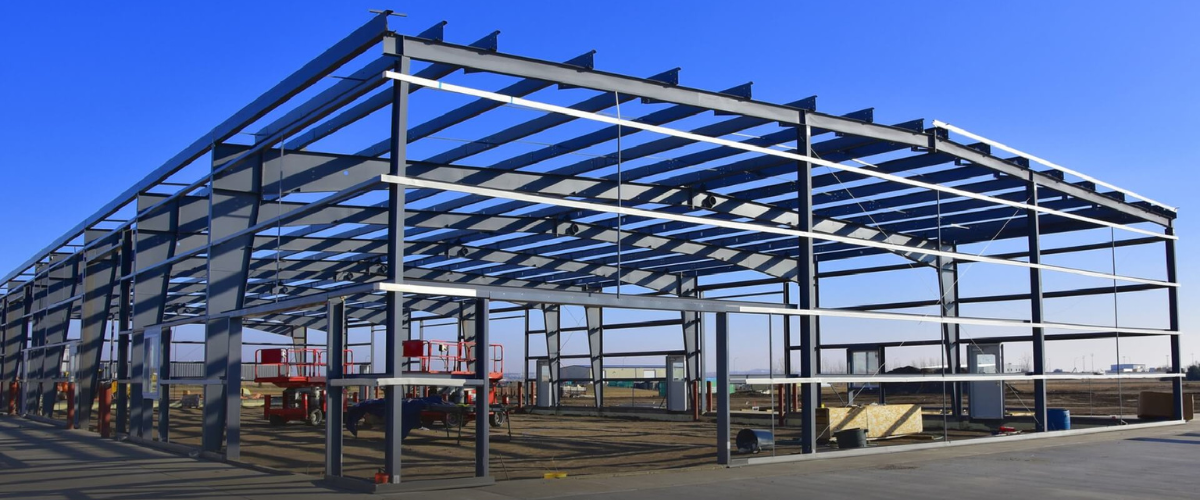
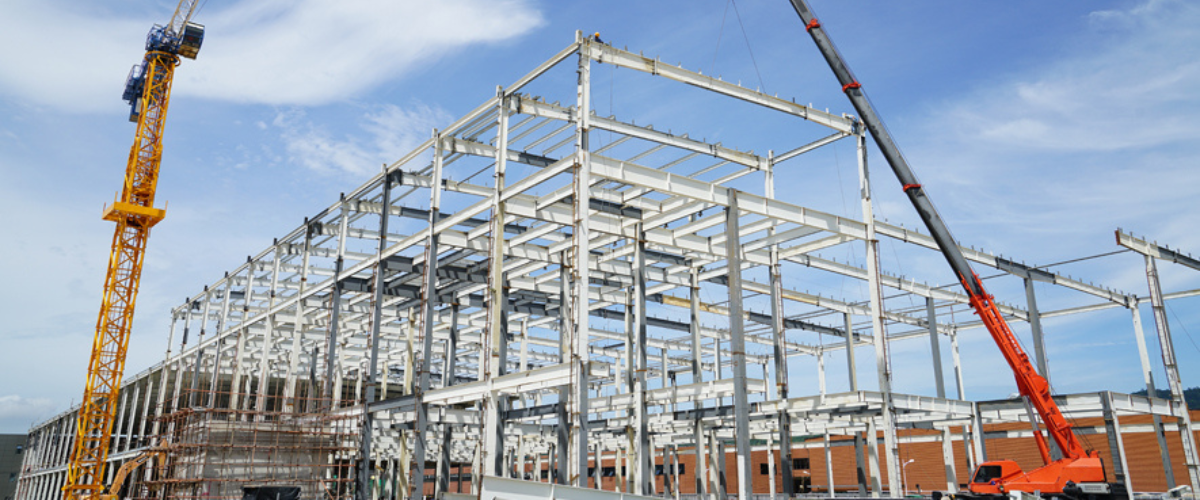
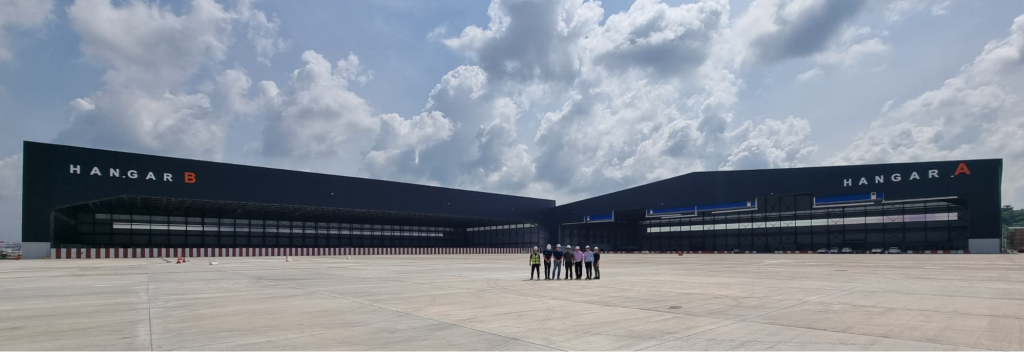
Aircraft MRO hangars demand one thing above all: maximising usable internal space to support safe aircraft manoeuvring, maintenance activities, and efficient ground operations.
For Asia Digital Engineering, the hangar needed to function as a high-performance operational environment—where layout, access, and space planning directly impact daily productivity.
HITEC Metal’s PEB solution
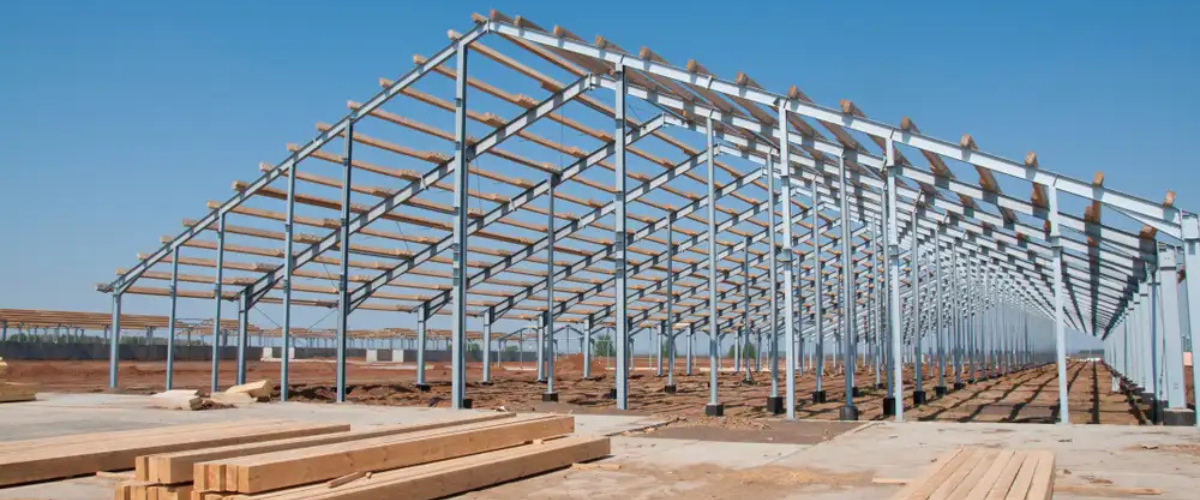
PEB is particularly effective for aviation facilities because it enables wide clear spans with fewer internal columns, helping maintain operational safety zones and allowing flexible workshop planning.
For this hangar, the structural system was designed to prioritise clear internal space and functional access, while maintaining programme control through off-site fabrication and planned installation. We covered:
Delivered scope:
- Engineering and detailing of the steel structure
- Fabrication of structural steel components
- Delivery and on-site erection
- Roofing and wall cladding system
- Integration of hangar access systems (e.g., large door solution)
Outcomes:
- Clear-span environment supporting aircraft maintenance workflows
- Flexible space planning for equipment, work zones, and movement paths
- Reduced on-site disruption through controlled erection sequencing
- Future-ready structure designed to support operational growth
Notably, this hangar is listed in the Malaysia Book of Records as the Longest Single-Span PEB system with a vertical lift door in Malaysia (153m).
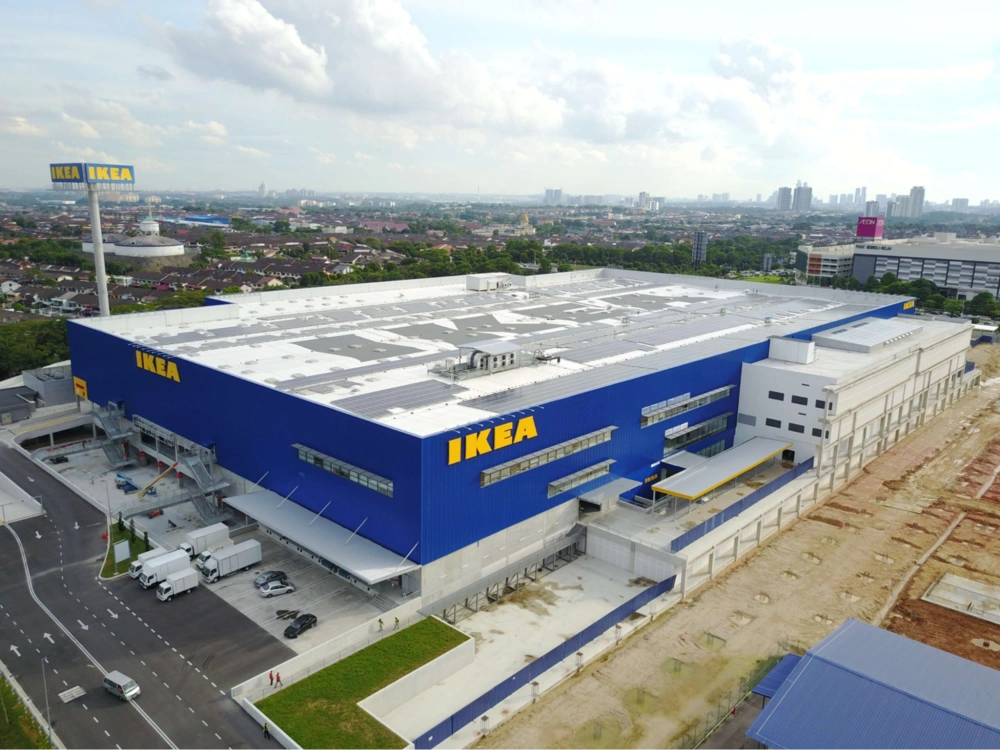
Spanning 46,713 square metres, IKEA Tebrau is IKEA’s largest store in Southeast Asia, requiring a large-format structure delivered with programme certainty and efficient space planning.
Large-format commercial builds also demand predictable sequencing and smooth coordination across multiple work packages, so the structural solution must support efficient space usage and controlled site execution.
HITEC Metal’s PEB solution
PEB is well-suited to large-format commercial facilities because it supports efficient structural spans and repeatable construction sequencing, helping teams maintain control over schedule and on-site activities.
For IKEA Tebrau, HITEC Metal delivered a PEB approach designed to support clear internal planning and coordinated delivery across core building elements
Delivered scope:
- Engineering and detailing of the steel structure
- Fabrication of structural steel components
- Delivery and on-site erection
- Roofing and wall cladding system
- Coordination with broader project requirements (e.g., interfaces with other trades)
Outcomes:
- Structural system supporting efficient internal planning and space usage
- Controlled installation sequence supporting programme certainty
- Reduced site complexity through off-site fabrication and planned erection
- Future-ready structure supporting operational needs and potential expansion
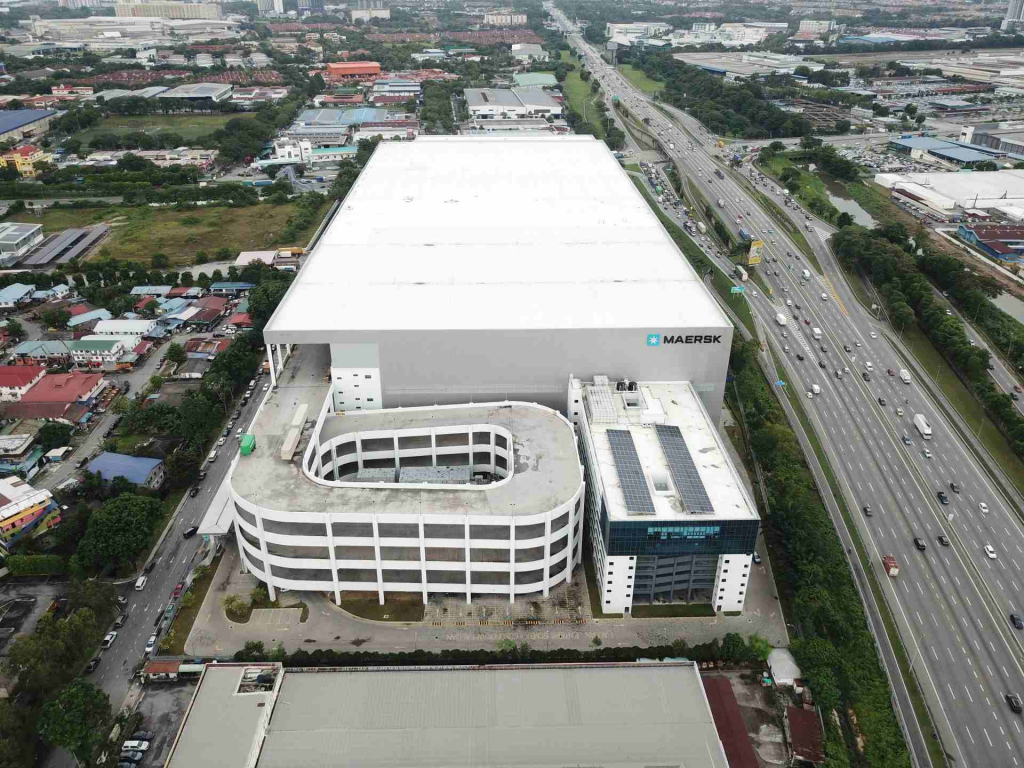
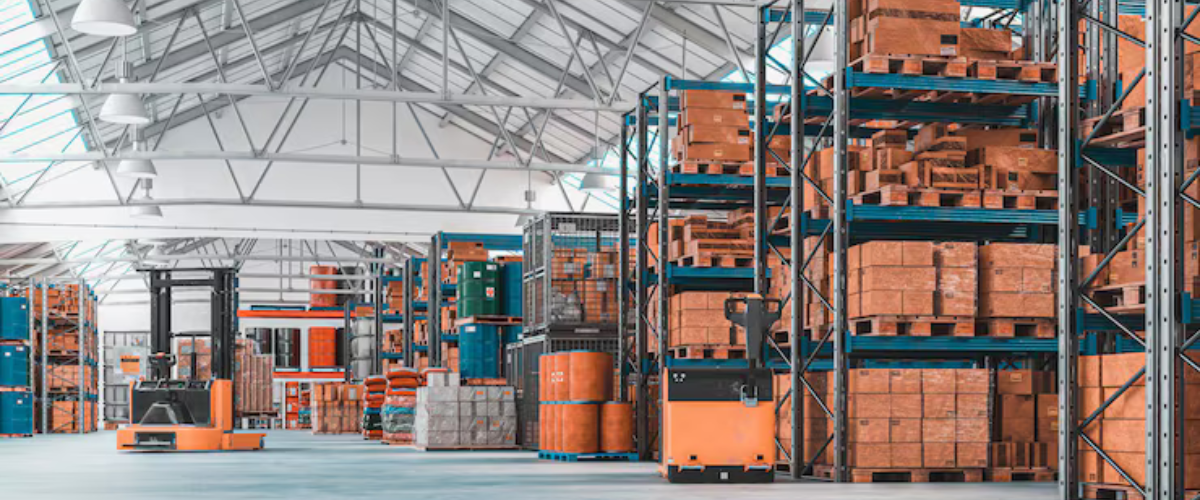
Distribution centres are designed around movement—goods handling, racking layouts, forklift routes, loading bays, and safe circulation.
For Maersk Logistics, the facility needed to support a high-throughput warehouse environment with efficient space usage and a structure that can accommodate operational changes over time.
HITEC Metal’s PEB solution
For logistics facilities, PEB supports operational performance by enabling wide, column-free interior space that improves storage planning and movement efficiency.
For Maersk Logistics, HITEC METAL delivered a warehouse PEB approach designed to support throughput-driven operations and scalable space planning, while maintaining programme control through off-site fabrication and planned installation.
Delivered scope:
- Engineering and detailing of the steel structure
- Fabrication of structural steel components
- Delivery and on-site erection
- Roofing and wall cladding system
- Integration of warehouse-specific requirements (e.g., loading/service areas, access points)
Outcomes:
- Layout-ready warehouse structure supporting storage and operational flow
- Clear interior planning that accommodates racking and movement paths
- Controlled site execution through off-site fabrication and planned erection
- Expansion-ready structure to support future operational scaling
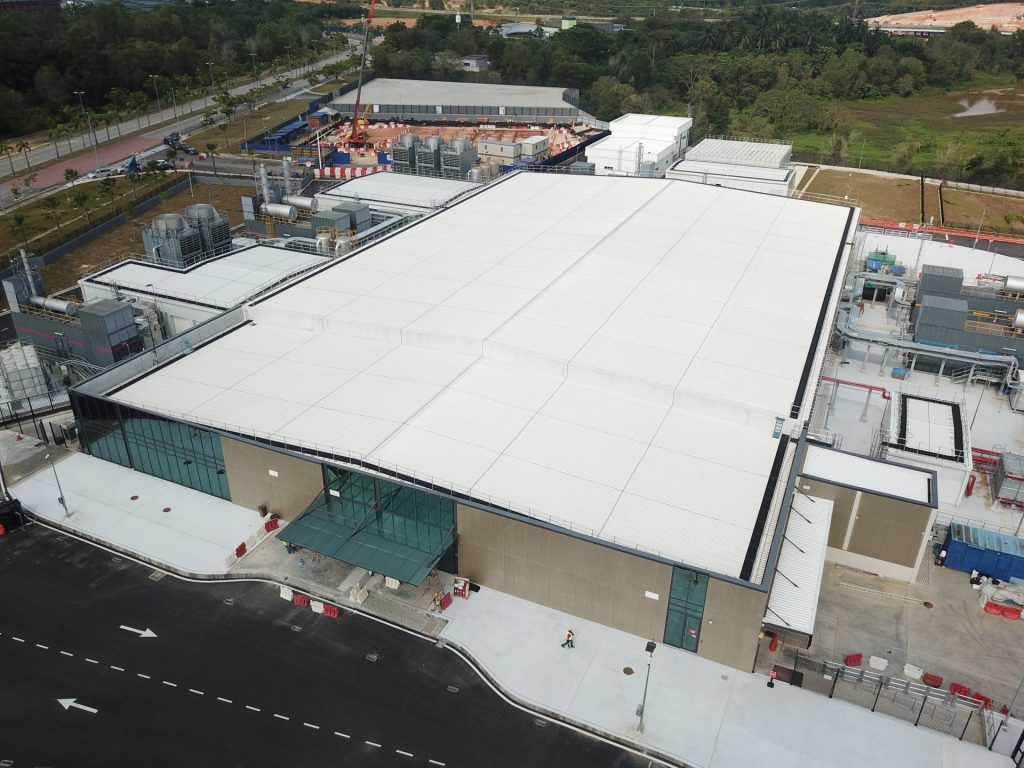
Data centres are performance-driven facilities where reliability, coordination, and build accuracy matter as much as speed.
For Microsoft Malaysia, the facility needed a technical environment with delivery discipline—clear planning, controlled sequencing, and reliable execution to support operational readiness.
HITEC Metal’s PEB solution
PEB can be a strong fit for data-centre-type facilities because it supports controlled delivery through off-site fabrication and planned erection, helping teams manage programme sequencing and reduce on-site variability.
For Microsoft Malaysia, HITEC METAL delivered a PEB approach to support coordinated execution and practical space planning for a technical facility.
Delivered scope:
- Engineering and detailing of the steel structure
- Fabrication of structural steel components
- Delivery and on-site erection
- Roofing and wall cladding system (if applicable to this package)
- Coordination with technical facility requirements and interfaces
Outcomes:
- Structural layout supporting technical zoning and functional access planning
- Controlled installation sequence supporting programme certainty
- Reduced on-site complexity through prefabrication and planned erection
- Future-ready structure designed to support operational scaling and change
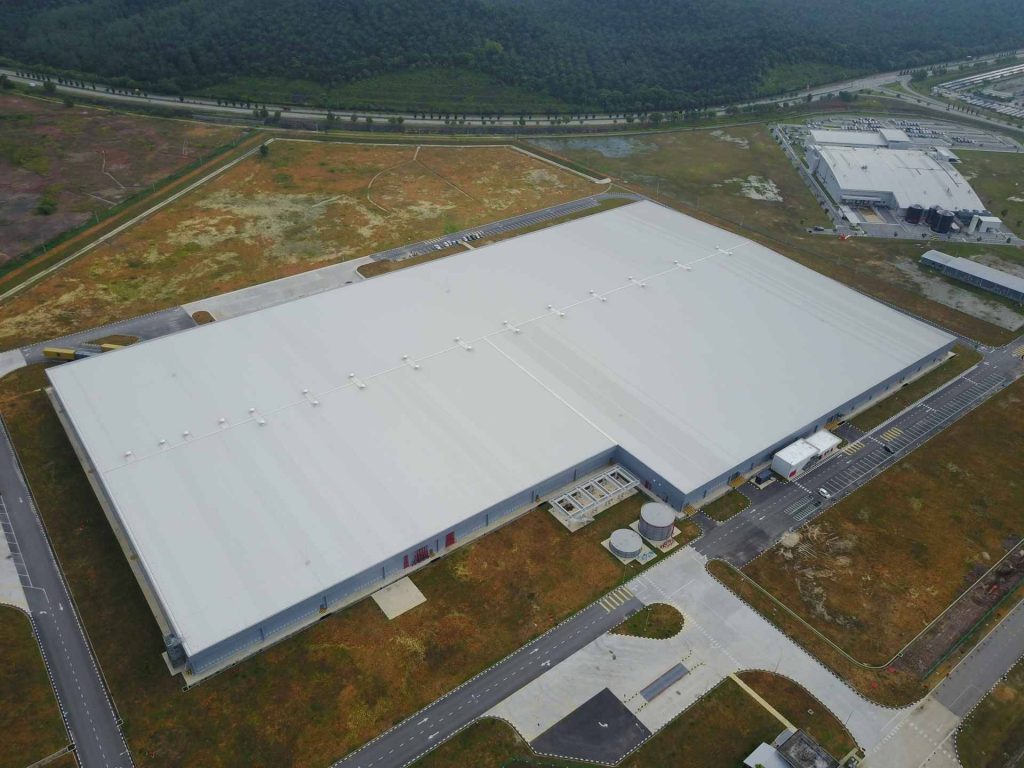
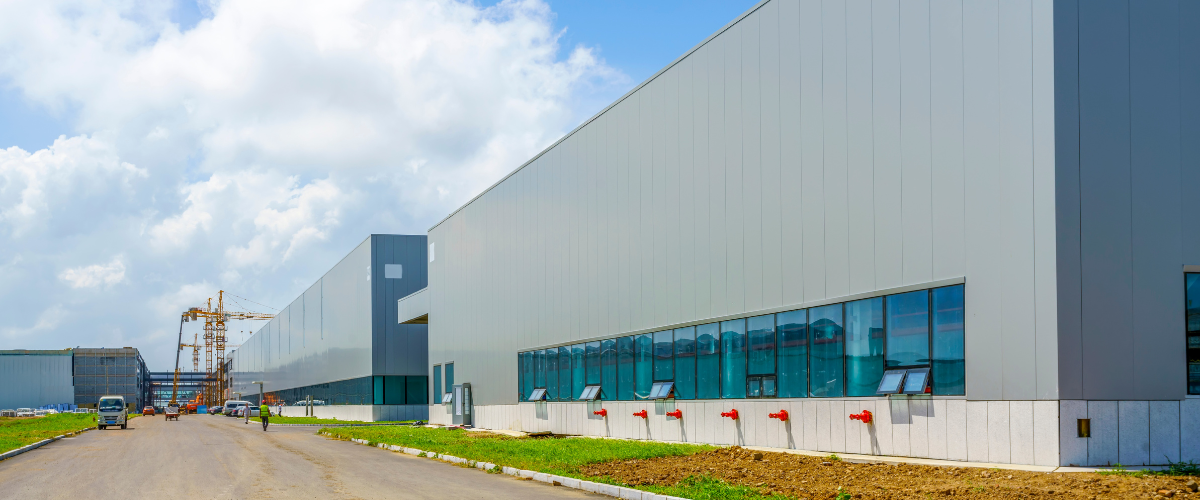
Industrial facilities are built around throughput, consistency, and disciplined site execution—where the structure must support practical layouts, service access, and long-term operational reliability.
Spanning approximately 250,000 m², First Solar required an industrial structure delivered with programme certainty and practical space planning to support day-to-day operations at scale.
HITEC Metal’s PEB solution
PEB is well-suited to industrial manufacturing environments because it supports efficient structural planning and controlled delivery through off-site fabrication and planned erection.
For First Solar, HITEC METAL delivered a PEB approach designed to support a functional manufacturing layout and reliable execution on an industrial site.
Delivered scope:
- Engineering and detailing of the steel structure
- Fabrication of structural steel components
- Delivery and on-site erection
- Roofing and wall cladding system (if applicable to this package)
- Coordination with manufacturing-related interfaces (e.g., service areas, access requirements)
Outcomes:
- Structural layout supporting manufacturing workflow and operational zoning
- Controlled installation sequence supporting programme certainty
- Reduced on-site complexity through prefabrication and planned erection
- Future-ready structure designed to support operational scaling and change
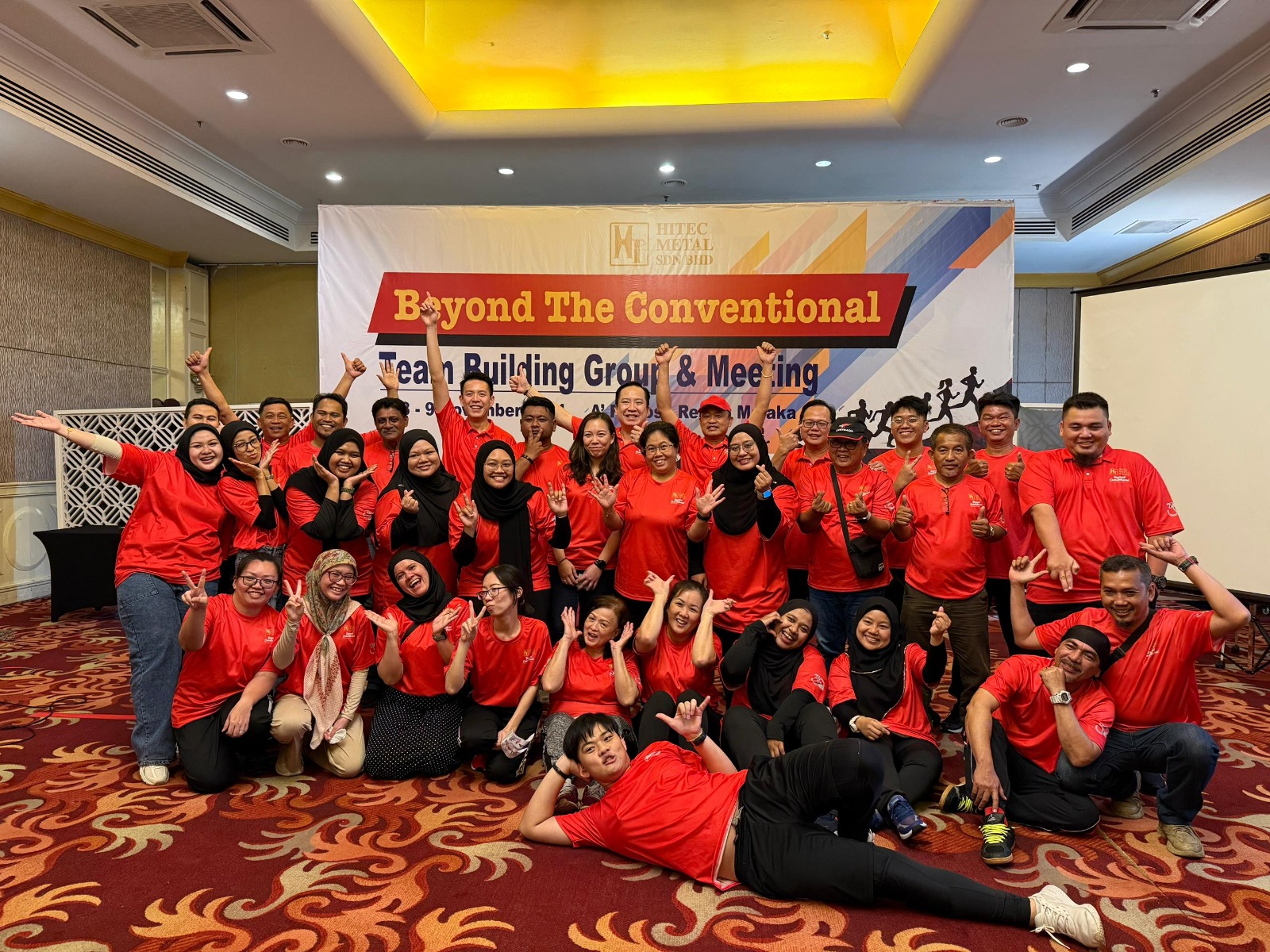
Choosing PEB is only the first step—success depends on how well the building is engineered around real operational needs and how reliably it is delivered on site. HITEC Metal supports businesses across Malaysia with design-and-build steel solutions, backed by CIDB Grade 7 capability and ISO-certified management systems.
Why organisations choose HITEC Metal:
- CIDB Grade 7 contractor with proven delivery capability
- ISO 9001:2015, ISO 14001:2015, and ISO 45001:2018 certified for quality, safety, and sustainability
- Extensive experience across warehouses, data centres, agricultural and manufacturing facilities
- Engineering-led innovation, including Malaysia’s longest single-span pre-engineered building with a vertical lift door
With over three decades of experience, we design and deliver PEB solutions across aviation hangars, logistics warehouses, and industrial and commercial facilities—built to perform where it matters most: workflow, access, uptime, and future expansion.
Ready to move forward? Explore our PEB systems and solutions, or contact our team to discuss your project goals.